
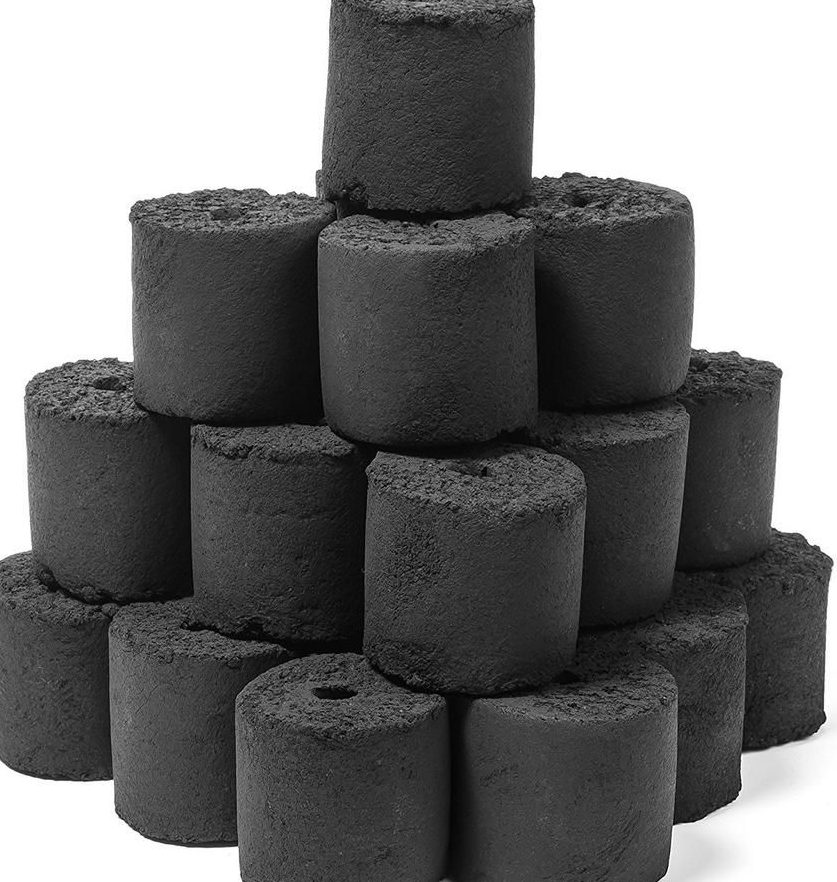
Coconut Shell Charcoal is one of the most valuable by-products of the coconut industry, widely recognized for its purity, high calorific value, and eco-friendly characteristics. Made from the hard shell of mature coconuts, this charcoal is a sustainable and renewable alternative to traditional wood-based charcoal — offering superior burning performance and minimal environmental impact. Each piece of coconut shell charcoal is produced through a carefully controlled carbonization process, where coconut shells are heated in limited oxygen conditions. This process results in dense, long-lasting charcoal that burns hotter and cleaner than conventional charcoal. The result is a high-quality fuel source ideal for a wide range of applications, from industrial use to culinary grilling and production.
What sets coconut shell charcoal apart is its exceptional hardness, low ash content, and smokeless combustion. These characteristics ensure steady heat output, reduced smoke emission, and minimal odor, making it particularly favored in both domestic and commercial markets. The ash residue is minimal — less than 3% — which means easier cleanup and more efficient energy use. After carbonization, the charcoal can be crushed, graded, and processed into various forms, including granular charcoal, powder, or compressed briquettes. These coconut shell briquettes are especially popular for barbecue and use, offering consistent performance, long burn time, and a clean experience without chemical additives.
Environmentally, coconut shell charcoal plays a vital role in promoting sustainable energy practices. It is derived entirely from agricultural waste — the discarded shells of coconuts — thereby helping reduce deforestation and supporting a circular economy. Unlike wood charcoal, it does not contribute to habitat loss or soil degradation, aligning with global efforts toward carbon neutrality and green production. From the tropical plantations where coconuts are grown to the advanced production facilities where shells are transformed into charcoal, every stage of the process reflects precision, sustainability, and quality control. The final product represents the perfect balance between nature’s efficiency and modern innovation, delivering consistent performance for global markets seeking both quality and sustainability.