
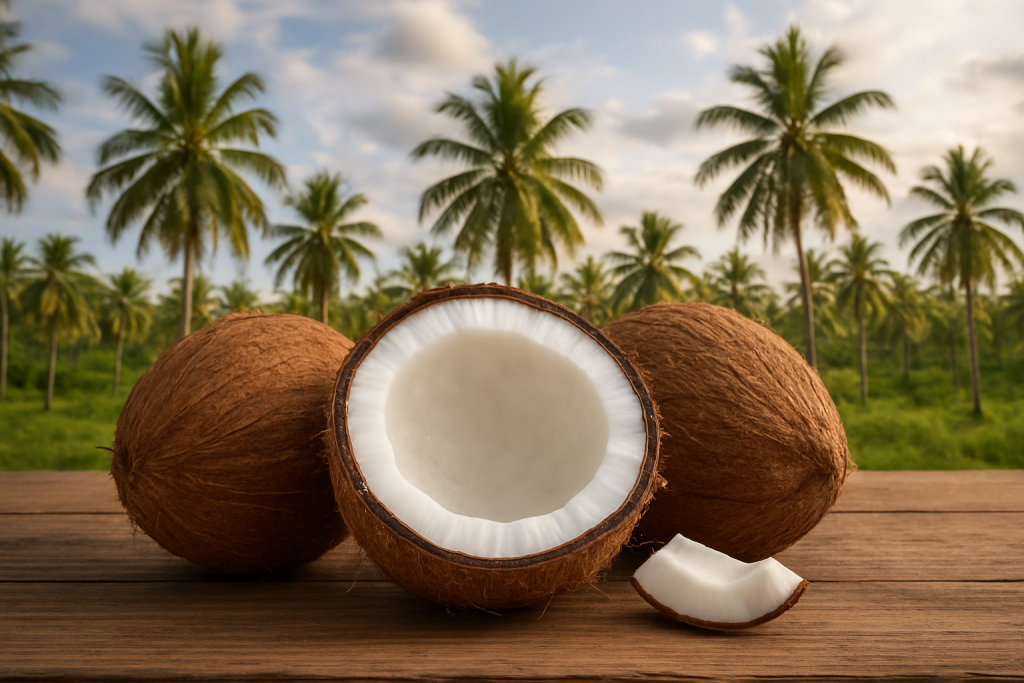
Indonesia has long been known as one of the world’s largest producers of coconuts — a gift of nature that thrives in the country’s tropical climate and fertile soil. Across thousands of islands, coconut trees stretch along coastlines and rural landscapes, becoming not just a vital source of livelihood but also a cultural symbol of harmony between humans and nature.
Every coconut product — from semi-husked coconuts and cocopeat to coconut fiber and charcoal — carries with it a story of craftsmanship, sustainability, and dedication. Behind each export lies the hard work of local farmers who cultivate, harvest, and process coconuts with care and respect for the environment. These farmers represent the backbone of Indonesia’s coconut industry, ensuring that each product reflects both natural purity and human expertise.
As coconuts travel from plantations in regions such as Sulawesi, Sumatra, and Java to international ports, they undergo strict quality control and sustainable processing practices. This journey symbolizes more than trade — it reflects a commitment to preserving the ecological balance while meeting the growing global demand for natural, eco-friendly products.
In recent years, the rise of green industries and sustainable living has brought renewed attention to coconut-based materials. Cocopeat, for instance, has become a preferred alternative to chemical-based soil mediums due to its biodegradability and high water retention capacity. Coconut fiber is now widely used in furniture, automotive, and construction industries, while coconut shell charcoal has emerged as a key component in high-quality briquettes for grilling and air purification.
Indonesia’s success in the global coconut market is built on three pillars: innovation, sustainability, and collaboration. Through research and development, the country continues to enhance the efficiency of its coconut processing while reducing waste. Fair trade practices ensure that farmers receive equitable benefits, fostering community growth and improving local economies.
Ultimately, Indonesian coconuts stand as a symbol of tropical excellence — a bridge between traditional agriculture and modern industry. Each export not only delivers a high-quality product but also tells a story of environmental stewardship and global partnership.
From the lush plantations of Indonesia to households and industries around the world, coconut products continue to represent the spirit of sustainability, innovation, and shared prosperity. Through dedication, integrity, and care for nature, Indonesia proudly shares the best of its tropical heritage with the global community — one coconut at a time.